
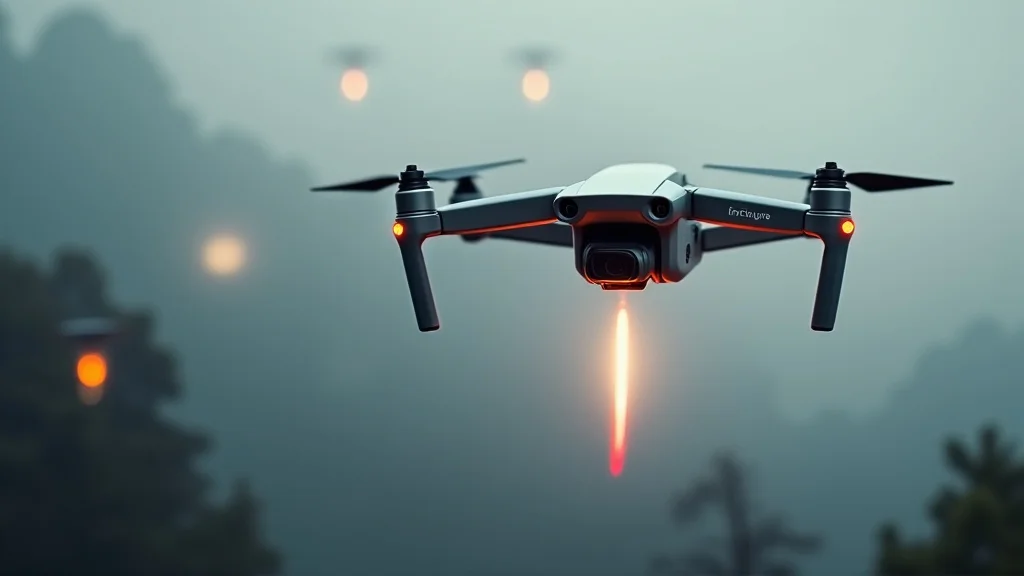
Imagine you’re watching a clear, starry night, and suddenly, a strange light zips across the sky, moving in ways that defy everything you know about physics. This is a scenario that many people have experienced, sparking curiosity and discussion about gimbal uap. This post explores the intricacies of these fascinating aerial sightings and the technology used to observe them. You’ll gain a deeper appreciation for the technology behind these observations and how we investigate the unusual. You’ll gain insights, explore the science, and learn how people explore the unexplained. By the end, you’ll be more informed about the equipment and the reports that people find interesting.
Key Takeaways
- Learn about the technology used to detect and record gimbal uap events.
- Explore the different types of equipment involved, from gimbals to advanced sensors.
- Discover how data from these observations is analyzed and interpreted.
- Examine the challenges and the possibilities of researching these events.
- Understand the difference between what we know and what we are still figuring out.
- Explore some of the possible explanations people have about the mysterious sightings.
Unmasking the Secrets of Gimbal UAP Technology
The exploration of Unidentified Aerial Phenomena (UAP) heavily relies on advanced technologies. These instruments help us to observe, record, and analyze strange sightings. These systems offer stable, detailed views, even when facing challenging conditions. From powerful cameras to complex sensors, the equipment involved plays a huge role in gathering information. This section will delve into the details of the tools scientists use to study these aerial anomalies.
The Role of Gimbal Systems in Capturing Anomalies
Gimbal systems are crucial for capturing clear videos of moving objects in the sky. These systems are designed to keep cameras and sensors steady. They work by using motors and sensors to counteract movement, allowing a stable view of whatever they’re tracking. This technology is incredibly important for accurately recording UAP events, because it enables observers to see details that would be otherwise lost due to the movement of the aircraft or the environment. This makes it possible to gather reliable data that can be used for detailed analysis.
- Stabilization: Gimbals use gyroscopes and accelerometers to stay steady, providing clear views even during rapid movements.
- Precision Tracking: They can accurately follow objects across the sky, maintaining focus and detail.
- Versatile Applications: This technology is used in various fields.
- Real-World Application: In practice, a gimbal might be mounted on an aircraft, a ship, or even on the ground.
The importance of gimbals is evident in many reported UAP sightings. They are essential to gathering reliable evidence and making credible observations. They ensure the data collected is of the best quality. The data is clear enough for proper analysis, which helps to separate fact from speculation.
Advanced Sensors: Expanding the Scope of Observation
Beyond simple video cameras, modern observation systems often incorporate a wide range of advanced sensors. These tools go beyond what the human eye can see, providing valuable information about UAP. Sensors gather different kinds of information, which helps researchers develop a deeper understanding of what is happening. The use of multiple sensors helps to improve the overall quality of data.
- Infrared Cameras: These cameras detect heat signatures, allowing observation of objects even at night or in low visibility.
- Radar Systems: Radar is used to track the movement of objects.
- Spectrometers: These tools analyze the light emitted or reflected by an object.
- Data Fusion: Combining data from multiple sensors provides a more complete picture of an event.
The combination of these sensors allows observers to see details beyond what standard cameras can capture. This allows for detailed analysis of movement, temperature, and light characteristics. This multi-sensor approach is crucial for building a strong understanding of any unexplained event.
Data Processing and Analysis in Gimbal UAP Studies
Collecting data is just the beginning. The next step is processing and analyzing the collected information. This is where the raw data from sensors and cameras gets transformed into usable information. Specialists use a range of techniques and technologies to analyze these videos and recordings. These processes are designed to find patterns and make it possible to identify anything unusual. This detailed analysis is key to better understand what is being observed.
The Steps of Data Processing and Analysis
Analyzing data is a complex process. It involves several key steps. Each step plays a part in changing the raw information into useful information. These steps help experts to remove noise, confirm details, and form explanations. This process helps to ensure that all data is understood.
- Data Acquisition: Information is gathered from the sensors. This includes video recordings, radar data, and infrared readings.
- Pre-processing: Data undergoes cleaning. This includes removing errors and noise, and calibration.
- Feature Extraction: Key characteristics are selected. This includes movement patterns, light emissions, and size.
- Pattern Recognition: Advanced algorithms look for trends or anomalies. This can include movement and behavior.
- Visualization: Data is often presented visually to help with understanding. This can be videos or graphs.
Each step is crucial. This ensures that the data is thoroughly examined. This gives researchers the best opportunity to learn from their findings.
Interpreting the Findings and Forming Explanations
Once the data is processed and analyzed, the next step involves interpreting the findings. This can be a challenging process, as it involves taking the technical data and putting it in a real-world context. This often requires bringing together multiple experts. Their varied insights help to come up with possible explanations. The goal is to come to a conclusion that is backed by evidence and makes sense.
- Peer Review: Findings are often reviewed by other experts in the field.
- Hypothesis Development: Based on the data, scientists build theories to explain what was observed.
- Comparative Analysis: Data is compared with known objects and phenomena.
- Ongoing Research: Research can continue, and new questions may be raised.
The process of interpreting the findings is open. It encourages questions and collaboration. The process is critical to separating fact from fiction.
Examples and Real-World Applications
The technologies used in gimbal uap research have many real-world applications. These advancements have improved technology in different fields. From defense to scientific research, the equipment used to study these events has been adapted for other uses. These advancements have led to breakthroughs that benefit society.
Case Studies: Significant Gimbal UAP Sightings
Several famous reports demonstrate the effectiveness of using advanced technology. These reports often lead to increased interest in the subject. They help to illustrate the importance of using high-tech equipment in these investigations. The following examples demonstrate how valuable these tools are.
- The “Gimbal” Video: The “Gimbal” video, released by the Department of Defense, shows a UAP rotating in the air. The object’s motion and behavior were hard to describe, highlighting the technology’s effectiveness.
- The “Go Fast” Video: This video, also released by the Department of Defense, shows a UAP moving rapidly across the water’s surface. The data provided by the gimbal system clearly highlighted the object’s speed and capabilities.
- The “FLIR” Video: The “FLIR” video, which uses an infrared camera, captures a UAP. The use of infrared highlights the value of gathering multiple kinds of data.
These case studies underscore the significance of using sophisticated equipment. They demonstrate the value of this technology in the study of UAP.
Practical Results and Technological Advancements
Research in the area of UAP has led to important technological advances. From improved sensor technology to advanced algorithms for data analysis, these improvements provide clear benefits. These advances help to make our lives better.
- Enhanced Surveillance: Technology developed helps create better surveillance systems.
- Better Sensor Technology: Research has improved the performance of sensors.
- Advanced Data Processing: New algorithms have been developed for more detailed data analysis.
- Improved Imaging Capabilities: Progress has been made in capturing images.
The improvements from research in this area have many real-world benefits. They have led to progress in many fields. These breakthroughs help to push the limits of technology, making it possible for new discoveries.
Common Myths Debunked
Discussions about gimbal uap are often filled with misinformation. It is critical to address and debunk common myths. This helps to separate fact from speculation. Examining these false ideas helps to make sure that discussions are based on accurate details. Doing so helps to develop a better understanding of the topic.
Myth 1: All UAP are Alien Spaceships
Many people believe that UAP are always alien spacecraft. This is one of the most widespread myths. While the possibility of extraterrestrial visitors remains, it is important to remember that most UAP sightings are more likely to be something else. The majority of sightings have a logical explanation that does not involve alien life. These explanations include military aircraft, weather phenomena, or natural events. It is important to look at all possible explanations.
Myth 2: Government Agencies Know Everything
Some people think government agencies are in possession of all the answers regarding UAP. Although government agencies are involved in studying UAP, their knowledge is still limited. There is not any proof that they know everything. The amount of information known is limited by funding, access to data, and the challenges of studying these events. The truth is that there is still much we do not know about UAP.
Myth 3: Technology Used is Simple
Many individuals believe that the technology used to observe and record these events is simple. In reality, the systems deployed are highly complex. They use advanced sensors, sophisticated processing techniques, and specialized equipment. The level of engineering involved requires detailed research, training, and development to work properly.
Myth 4: Sightings are a Modern Phenomenon
Some people believe that reports of unexplained aerial phenomena are a recent event. However, sightings have been recorded for centuries. Reports go back to ancient times and continue in modern society. This shows that the phenomenon has always been around. The key difference is that the technology to record them has improved.
Myth 5: All Sightings Are Fabrications
Some people believe that every report of a sighting is fake. In reality, many are, but there are instances where they are confirmed. While some reports may be wrong or misunderstood, many have been verified using technology. These instances provide proof that the subject deserves more exploration.
Frequently Asked Questions
Question: What is a gimbal?
Answer: A gimbal is a pivoted support that allows an object to rotate on an axis. In gimbal uap research, gimbals are used to stabilize cameras and sensors, providing clear recordings of moving objects in the sky.
Question: How does a gimbal stay steady?
Answer: Gimbals use a combination of gyroscopes, accelerometers, and motors to counteract movement. These systems detect changes in position and direction, automatically adjusting to keep the camera or sensor steady.
Question: What kind of sensors are used?
Answer: Researchers use various types of sensors, including visual cameras, infrared cameras, and radar systems. They can also use radio frequency sensors and spectrometers, each providing different types of information.
Question: How is the data analyzed?
Answer: The data is processed using specialized software and algorithms. These are designed to remove noise, confirm details, and spot any unusual activity. Experts then interpret the findings to generate possible explanations.
Question: Where can I find more information?
Answer: You can explore official government reports, scientific papers, and documentaries that have been released to the public. Websites dedicated to UAP research provide a lot of information.
Final Thoughts
The world of gimbal uap offers a chance to explore the unknown. The equipment used to capture these sightings reveals an exciting combination of technology and investigation. From the steady hands of gimbal systems to the detailed insights from advanced sensors, the goal is to fully understand what is happening. The careful process of analysis, using both science and innovation, is key to uncovering the mysteries of UAP. It is important to be inquisitive, think critically, and consider every possibility. Research into UAP can drive technological advancements and expand scientific exploration. Keep a curious mind, and stay open to new discoveries.