
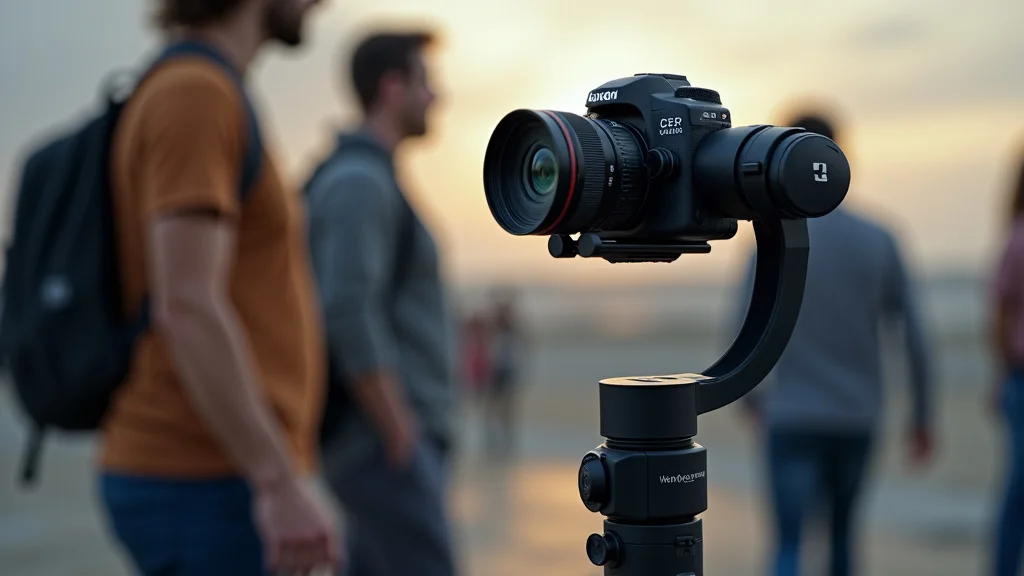
Picture this: you’re at a concert, trying to capture the energy of your favorite band. Your phone’s camera, despite its best efforts, just can’t keep up with the movement. The video is shaky, making it almost unwatchable. Now imagine that same scene, but this time, the camera glides smoothly, capturing every beat and high note with perfect clarity. That’s the power of the gimbal god. This post will transform your videos from shaky to stunning. You’ll learn the essential techniques and tricks to become a gimbal god, improving your video quality, which will keep your audience engaged. Get ready to level up your filmmaking skills and impress your viewers!
Key Takeaways
- Learn the essential components of a gimbal and how they work.
- Discover how to choose the right gimbal for different camera types and needs.
- Master the basics of gimbal operation, including balancing and calibration.
- Explore different shooting techniques to create smooth and dynamic shots.
- Find out how to troubleshoot common gimbal problems.
- Understand the importance of accessories and their impact on your filmmaking.
Unveiling the Power of the Gimbal God
The core concept of a gimbal revolves around stabilization. It employs a system of motors and sensors to counteract unwanted movements, ensuring your camera remains steady. This stabilization is critical for creating professional-looking videos, especially when shooting on the move. When you understand how a gimbal functions, you’re better equipped to select the right one and use it to its full potential. The first step towards becoming a gimbal god starts here, with a clear grasp of this technology.
What Is a Gimbal? Understanding the Basics
At its heart, a gimbal is a stabilizing device. It uses motors to counteract movement in multiple axes: pan (horizontal rotation), tilt (vertical rotation), and roll (rotation around the lens axis). This allows your camera to remain level and stable regardless of the user’s movements. This is accomplished through a combination of physical components and sophisticated software. The motors receive signals from internal sensors, which detect any movement of the camera. The motors then instantly adjust to compensate, ensuring the camera stays perfectly still.
- A gimbal typically consists of three main components: motors, an inertial measurement unit (IMU), and a control board.
- The motors provide the physical force to stabilize the camera.
- The IMU, often incorporating accelerometers and gyroscopes, measures the camera’s movement in space.
- The control board processes data from the IMU and sends instructions to the motors to counteract any unwanted motion.
Components of a Gimbal
The components work in synergy to deliver the magic of smooth video. Understanding these pieces is vital for anyone aspiring to become a gimbal god. The IMU is a crucial element, acting as the brain of the operation. It constantly monitors the camera’s position and orientation. The control board interprets these readings and sends instructions to the motors to maintain a stable shot. This constant adjustment creates the smooth, cinematic effect that defines professional video quality.
- Motors: These are the workhorses of the gimbal, providing the physical force to counteract movement. They are typically brushless DC motors, known for their precision and responsiveness. They are positioned along each axis (pan, tilt, and roll) to correct unwanted motion.
- Inertial Measurement Unit (IMU): The IMU is a collection of sensors that measure the camera’s movement and orientation. Common components include accelerometers (measure acceleration) and gyroscopes (measure angular velocity). The IMU continuously sends data to the control board to provide real-time information about the camera’s position.
- Control Board: The control board is the central processing unit of the gimbal. It receives data from the IMU, analyzes it, and sends commands to the motors to make adjustments. Advanced algorithms on the control board determine how the motors should react to maintain a stable image.
Choosing the Right Gimbal: Your Equipment’s Best Friend
The market offers a wide array of gimbals. Selecting the right one is about matching the device to your camera and your shooting style. Consider the weight and size of your camera, as this determines the gimbal’s payload capacity. Also, think about the features you need. Do you need advanced tracking or time-lapse capabilities? The best gimbal god selects the right equipment for the task.
Matching Gimbal to Camera Type
Different cameras require different gimbals. Phone gimbals are compact and lightweight, designed for the specific needs of smartphones. DSLR and mirrorless gimbals handle heavier cameras and offer more advanced features. Choosing the right gimbal means the difference between a successful shoot and a frustrating experience. A key component is ensuring the gimbal can handle the weight and dimensions of your camera system. Using the wrong gimbal can cause motor overload and unstable footage.
- Smartphone Gimbals: These gimbals are compact and lightweight, perfect for smartphones. They offer basic stabilization and often include features like tracking and time-lapse.
- DSLR and Mirrorless Gimbals: These are more robust, designed to handle larger and heavier cameras. They provide more advanced stabilization, control options, and features, often offering greater payload capacity.
- Action Camera Gimbals: These gimbals are built to be compact and durable, suitable for action cameras. They can withstand rough conditions and typically offer waterproof features.
Key Features to Consider
Beyond camera compatibility, consider these features: payload capacity (how much weight the gimbal can support), battery life, and control options. Battery life is critical, so be sure the gimbal offers enough power for your typical shoots. Controls such as joystick for camera movement and button mapping for various functions are also key. A skilled gimbal god always keeps these factors in mind.
- Payload Capacity: The maximum weight the gimbal can support. Make sure it can handle your camera, lens, and any accessories.
- Battery Life: The amount of time the gimbal can operate on a single charge. Longer battery life is crucial for extended shoots.
- Control Options: Consider joystick, button, and app-based controls. A well-designed control system allows precise camera movement and control over settings.
- Modes and Features: Explore tracking modes, time-lapse functions, and scene presets. These features can significantly enhance your creative possibilities.
Mastering Gimbal Operation: From Setup to Smooth Shots
The power of the gimbal god lies in their ability to operate the equipment. Balancing and calibration are essential steps. Mastering different shooting techniques adds fluidity to your videos. Practicing these techniques transforms ordinary shots into cinematic masterpieces.
Balancing and Calibration: The Foundation of Stability
Before using the gimbal, you must balance and calibrate it properly. Incorrect balancing causes motor strain, which impacts performance. Calibration aligns the gimbal’s sensors, ensuring it operates smoothly. The process typically involves adjusting the camera’s position on the gimbal until it stays level. Proper balance ensures that the motors don’t have to work harder than necessary.
- Balancing: This involves adjusting the camera’s position on each axis until it stays level. This is often done using adjustable arms and sliding components.
- Calibration: This process aligns the gimbal’s sensors to ensure accurate performance. This often involves a process within the gimbal’s app.
- Follow the Manual: Each gimbal is different, so it is essential to follow the manufacturer’s instructions for balancing and calibration.
Essential Shooting Techniques
Once your gimbal is set up, you can try different shots. The “smooth pan” involves rotating the camera horizontally. The “tilt shot” means moving the camera vertically. The “follow shot” allows the camera to track a moving subject. Practice these techniques to develop your skills as a gimbal god.
- Smooth Pan: Rotate the camera horizontally to follow a subject or capture a wide scene.
- Tilt Shot: Move the camera vertically, either up or down, to create a sense of movement.
- Follow Shot: Keep the camera focused on a moving subject while maintaining smooth, stable footage.
- Low-Angle Shot: Position the gimbal close to the ground to capture a unique perspective.
Troubleshooting Common Gimbal Issues: The Gimbal God’s Repair Manual
Even the most experienced gimbal god encounters problems. Troubleshooting often involves quick fixes. Identifying and resolving issues quickly ensures you can resume shooting. Here, we delve into common problems and their solutions.
Common Problems and Solutions
Motor overload occurs when the camera is too heavy for the gimbal. Imbalanced setups cause shaky footage. Software glitches might affect performance. These issues are common, but they’re usually easy to resolve. Understanding these issues helps to keep your shoots on schedule.
- Shaky Footage: Often caused by poor balance or calibration. Rebalance and recalibrate the gimbal.
- Motor Overload: Occurs when the camera is too heavy for the gimbal. Use a lighter camera or a gimbal with a higher payload capacity.
- Drifting: The camera slowly tilts or pans over time. This can be caused by sensor drift or improper calibration. Recalibrate the gimbal.
- Connectivity Issues: Problems with the gimbal’s app or remote control. Ensure the devices are properly connected and updated.
Enhancing Your Video with Gimbal Accessories
Accessories increase your ability to create professional footage. These tools are key to becoming a successful gimbal god. These tools can improve your shooting style and enhance your creative control.
Essential Accessories
The right accessories can transform your video. External monitors provide a clear view of your shot. Extension poles allow you to get unique perspectives. These accessories increase your filming potential.
- External Monitor: Provides a clear view of the camera’s display, which helps with framing and focus.
- Extension Pole: Allows for overhead or low-angle shots.
- Tripod: Provides a stable base for the gimbal, enabling time-lapses and stationary shots.
- Extra Batteries: Ensures you don’t run out of power during long shoots.
Myth Debunking Section
Myth 1: Gimbals Are Only for Professionals
Many think gimbals are tools for experts only. The reality is that modern gimbals are designed for everyone, from beginners to pros. With intuitive controls and user-friendly apps, anyone can learn to use a gimbal and improve their video quality. The myth comes from the past when gimbals were expensive and complex, but now, affordable options make them accessible to all levels of creators.
Myth 2: You Need Expensive Gear to Get Good Results
It’s easy to believe that great videos require expensive gear. While top-of-the-line gimbals and cameras can provide excellent results, they’re not essential. With practice and basic techniques, you can capture amazing footage with more affordable equipment. Skill and creativity matter more than having the most expensive equipment.
Myth 3: Gimbals Are Only for Smooth Movements
Some believe gimbals are only for smooth tracking shots. This is a limited view. Gimbals can be used for a wide range of creative techniques, including dynamic pans, tilts, and even dramatic whip pans. They enhance the overall production value of your videos. The key is to experiment and discover how a gimbal can complement your shooting style.
Myth 4: Gimbals Replace All Other Stabilization Methods
Many think gimbals are the only stabilization method needed. Gimbals are fantastic, but they work best in certain situations. They may not be ideal in tight spaces or when you want to create a specific kind of shake. Sometimes, combining gimbals with other methods, such as in-camera stabilization or a tripod, provides the best results. The best approach varies based on the situation.
Myth 5: All Gimbals Are the Same
There’s a misconception that all gimbals offer the same performance. The market includes many variations, and the features and quality can differ widely. A phone gimbal won’t have the same capabilities as a gimbal for a DSLR. Different gimbals also have varying motor power, battery life, and control options. Choosing the right gimbal depends on your camera and creative needs.
Frequently Asked Questions
Question: Can I use a gimbal with any camera?
Answer: Not all cameras are compatible with all gimbals. It’s essential to match the gimbal’s payload capacity to your camera and any attached accessories’ weight.
Question: How often should I calibrate my gimbal?
Answer: Recalibrate your gimbal if you notice any drift or if you change the lens or accessories on your camera. Recalibration ensures the sensors are aligned correctly.
Question: What’s the best way to learn how to use a gimbal?
Answer: Start with the basics. Practice balancing, calibration, and essential shooting techniques. Watch tutorials and experiment. Practice is key to becoming a gimbal god.
Question: Can I use a gimbal in wet or dusty environments?
Answer: Check your gimbal’s specifications. Some are designed to be weather-resistant or waterproof, but most gimbals should be protected from the elements. Use a cover to protect the device.
Question: What if my gimbal isn’t working correctly?
Answer: Troubleshoot the issue. Check the balance, calibrate the gimbal, and ensure the firmware is updated. Consult the manufacturer’s manual or support resources for assistance.
Final Thoughts
The journey to becoming a gimbal god is one of experimentation, learning, and practice. You now know the basics of gimbals, from choosing the right one to mastering essential techniques. Remember that your skill, creativity, and the application of these principles will be more important than expensive equipment. Keep practicing, experimenting with different shots, and exploring the creative possibilities. Embrace the challenges, learn from your mistakes, and celebrate your successes. With each video, you’ll refine your skills and grow. So, pick up your gimbal, get out there, and start creating stunning cinematic footage. The world of filmmaking is waiting for your unique vision. Go create something amazing!